

Issue #71 // Deeper Signal
What Whoop's latest patent reveals about the future of wearable sensing


Thanks for reading! If you found this post useful, please consider subscribing. I share hands-on computational biology techniques, fresh ways to think about tough problems, and perspectives on a range of related topics. All free, straight to your inbox.
Issue № 71 // Deeper Signal
For the better part of the last five years, I’ve been predicting that the wearable technology industry would eventually abandon its fixation with single-point sensing—the use of a single localized device to monitor physical, physiological, or environmental data from one specific location on the body.
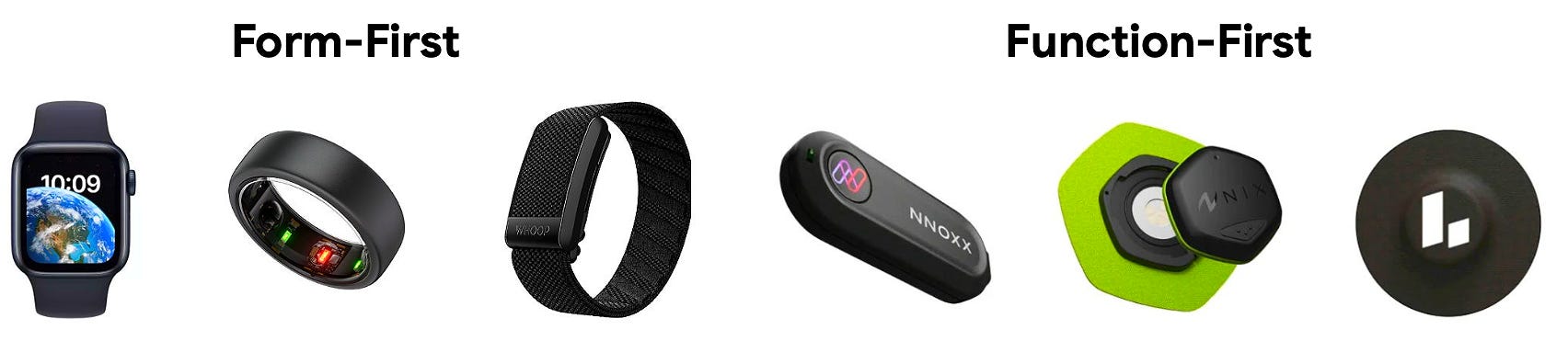
The smart watch, wristband, and smart ring-based form factors aren’t ubiquitous in continuous health monitoring because the wrist and finger are the best places to measure human physiology. They’re ubiquitous because they’re convenient and fashion forward—the epitome of form-first wearable design. Convenience has a way of calcifying into convention though, and for years the dominant players in the space—Whoop, Oura, Apple—showed little appetite for disrupting their own product lines.
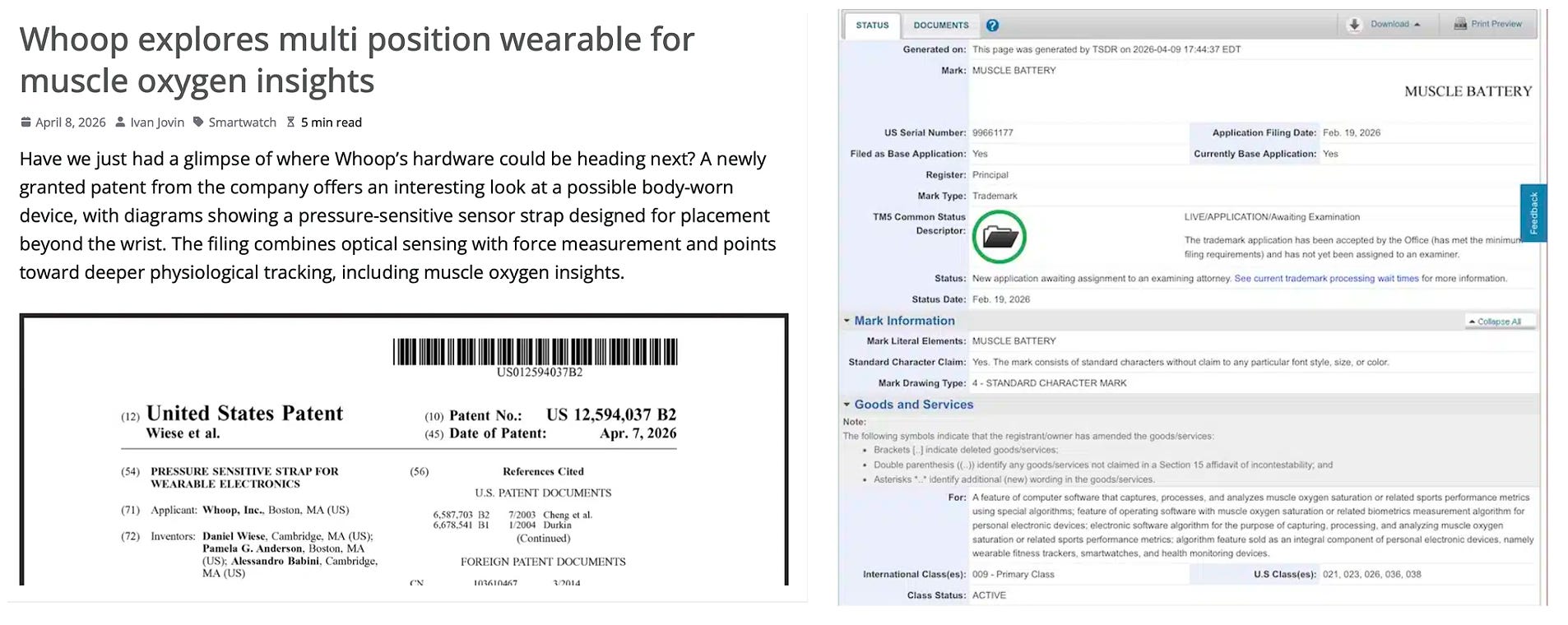
Then, just a few days ago, I saw a patent by Whoop and a trademark filing by Garmin—both pointing in the same direction—that changed my read on where the industry may be heading. To understand why, it helps to have context about a biometric that most people in the consumer health space have never heard of: muscle oxygenation (SmO2). As I’ve written previously in Dampening the Noise: Making Sense of Variability In Biometric Measurements, SmO2 is best understood as the balance of oxygen supply and demand in skeletal muscle.
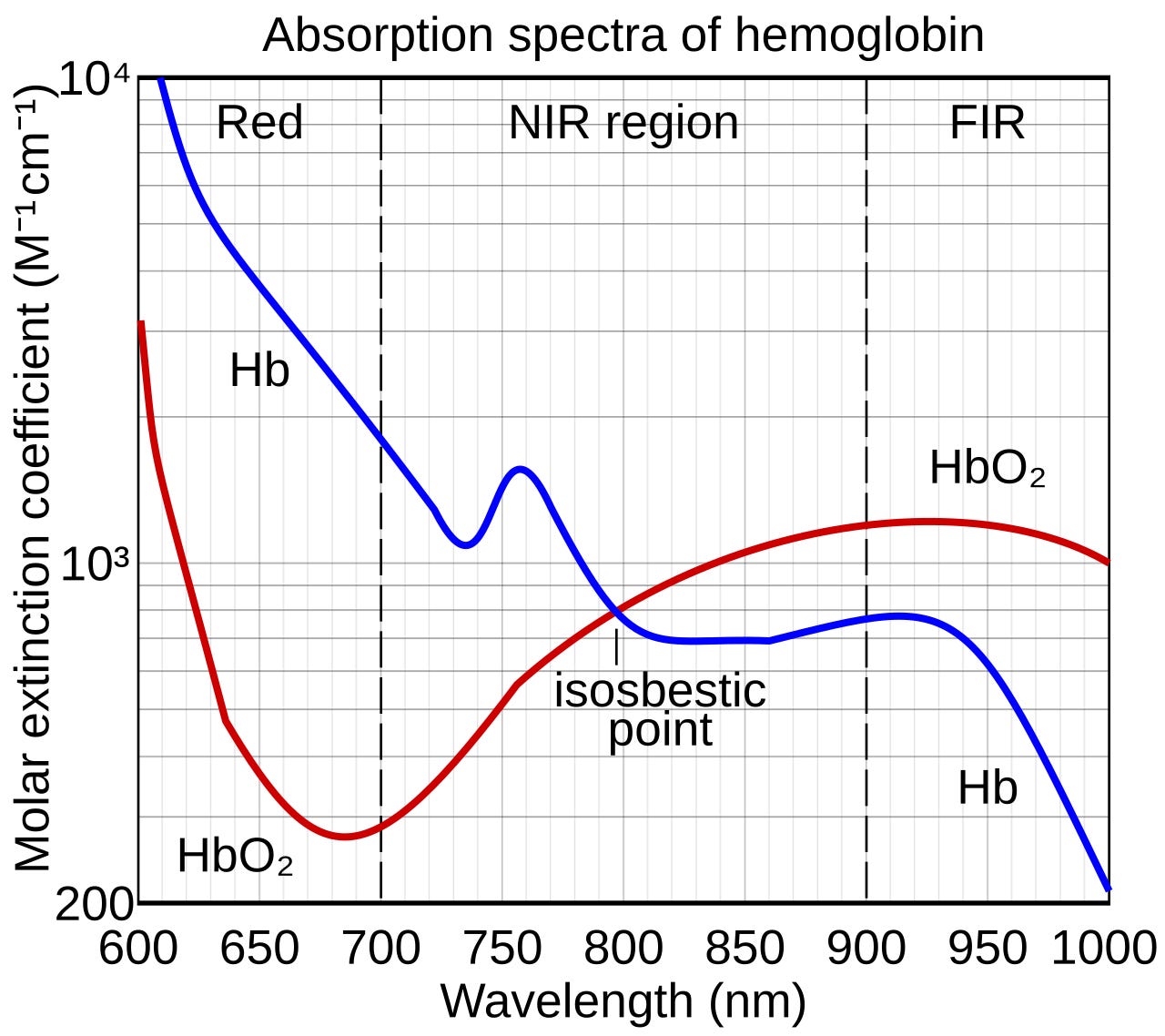
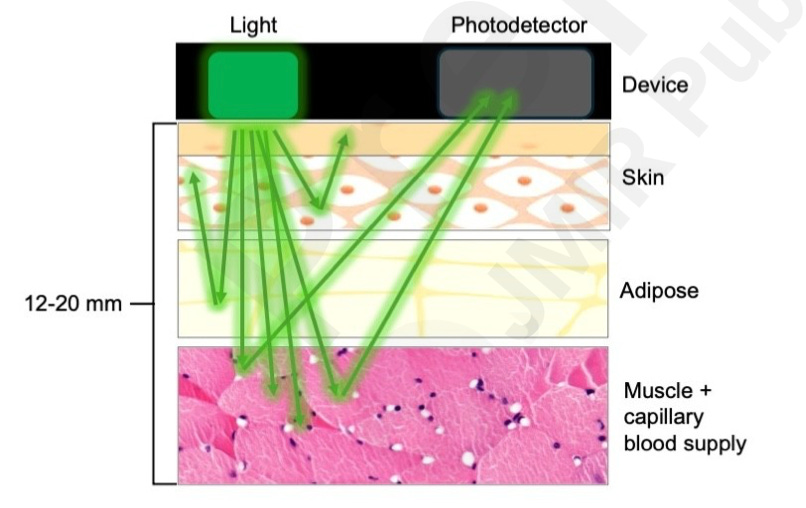
The basic principle behind measuring muscle oxygenation is fairly simple. Near-infrared light penetrates biological tissue with relative ease, and when directed at muscle, some of those photons are absorbed by hemoglobin and myoglobin—the oxygen-carrying proteins in blood and muscle cells respectively—while the rest scatter back to a detector on the skin surface. Oxygenated and deoxygenated forms of these proteins absorb light differently across wavelengths, so by measuring how much light returns at each wavelength, you can infer the ratio of oxygenated to deoxygenated hemoglobin in the tissue below the sensor.
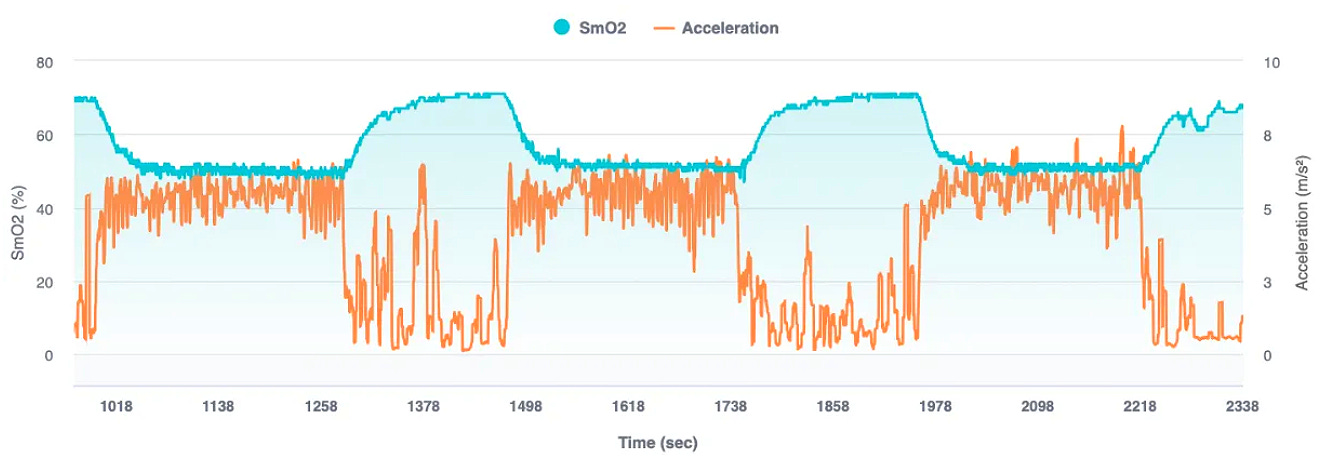
This is different from what your Apple Watch, Whoop, or Oura ring is doing when it estimates blood oxygen (SpO2). Those devices use pulse oximetry—a technique that isolates the pulsatile arterial signal in the capillary beds near the skin’s surface (1-2mm deep), giving you a read on how well oxygenated your blood is. Muscle oxygenation, by contrast, is measured much deeper (~20mm), past the skin and subcutaneous fat, reaching the muscle itself. Where pulse oximetry tells you about oxygen in arterial blood, mNIRS tells you about oxygen in the tissue’s microvasculature—a meaningfully different thing. When you do a heavy set of squats, the SpO2 reading on your wrist barely moves. The SmO2 signal in your quadriceps on the other hand drops rapidly (as much as a ~75% change in oxygen saturation) as demand outpaces supply, then rebounds during rest—telling you something concrete about how your muscles are responding to load, recovering between sets, and adapting over time.
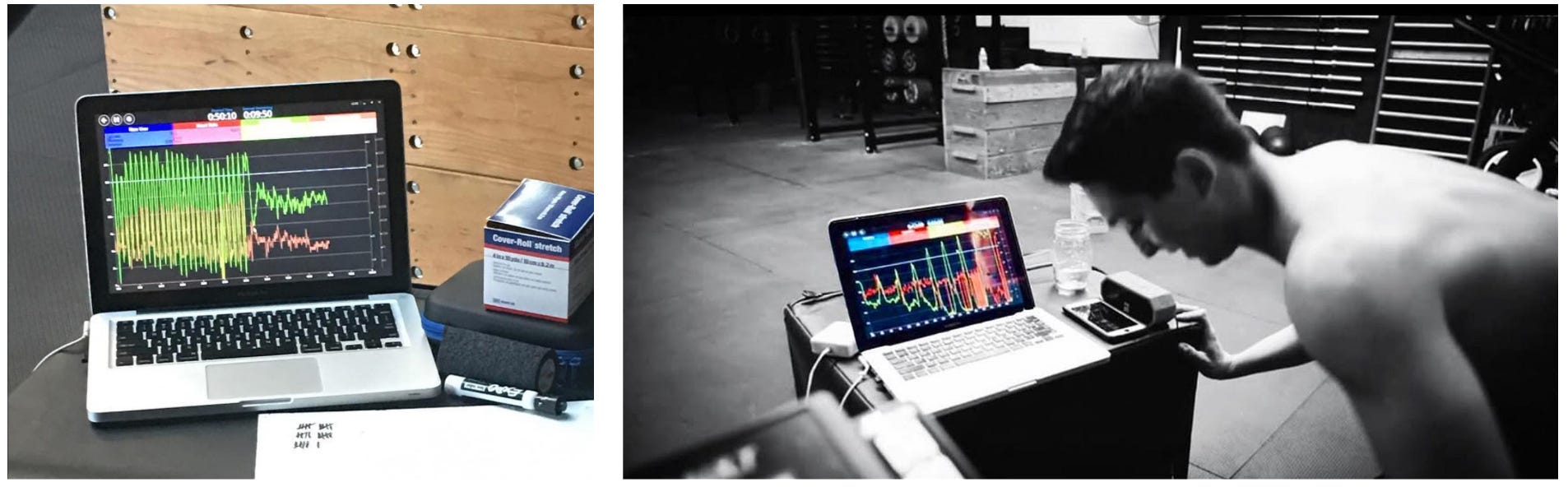
I first became interested in muscle oxygenation monitoring and mNIRS about twelve years ago, well before it had a meaningful foothold in consumer health. I later developed the first NSCA-certified course on training with muscle oxygenation for Moxy, and eventually co-founded NNOXX, one of the companies bringing this technology to a broader market. So when I say I’ve been watching this space closely, I mean it.
Over the past year, I’ve been trying to understand the trajectory of consumer awareness of this technology and how it compares to other measurements. The figure below shows Google Trends data for muscle oxygenation and heart rate variability—HRV, the wearable industry’s favorite recovery metric over the past decade—over the previous 25 years. Looking at the chart, two very different trajectories emerge. HRV’s rise—starting in ~2014—was steep and relatively sustained, carried upward by a succession of product launches from Whoop and Oura, each new device generation producing another wave of consumer interest. But look more carefully at what drove those waves, and something becomes apparent: with each successive product release, both companies seem to be extracting diminishing returns in terms of search popularity. Their hardware iterations still move the needle, but by less each time. The single biggest driver of consumer interest in wearable health monitoring over the past decade wasn’t a product launch at all—it was COVID-19, which sent search interest in biometric tracking sharply upward across the board as people became acutely aware of their own physiological states in a way they hadn’t been before.
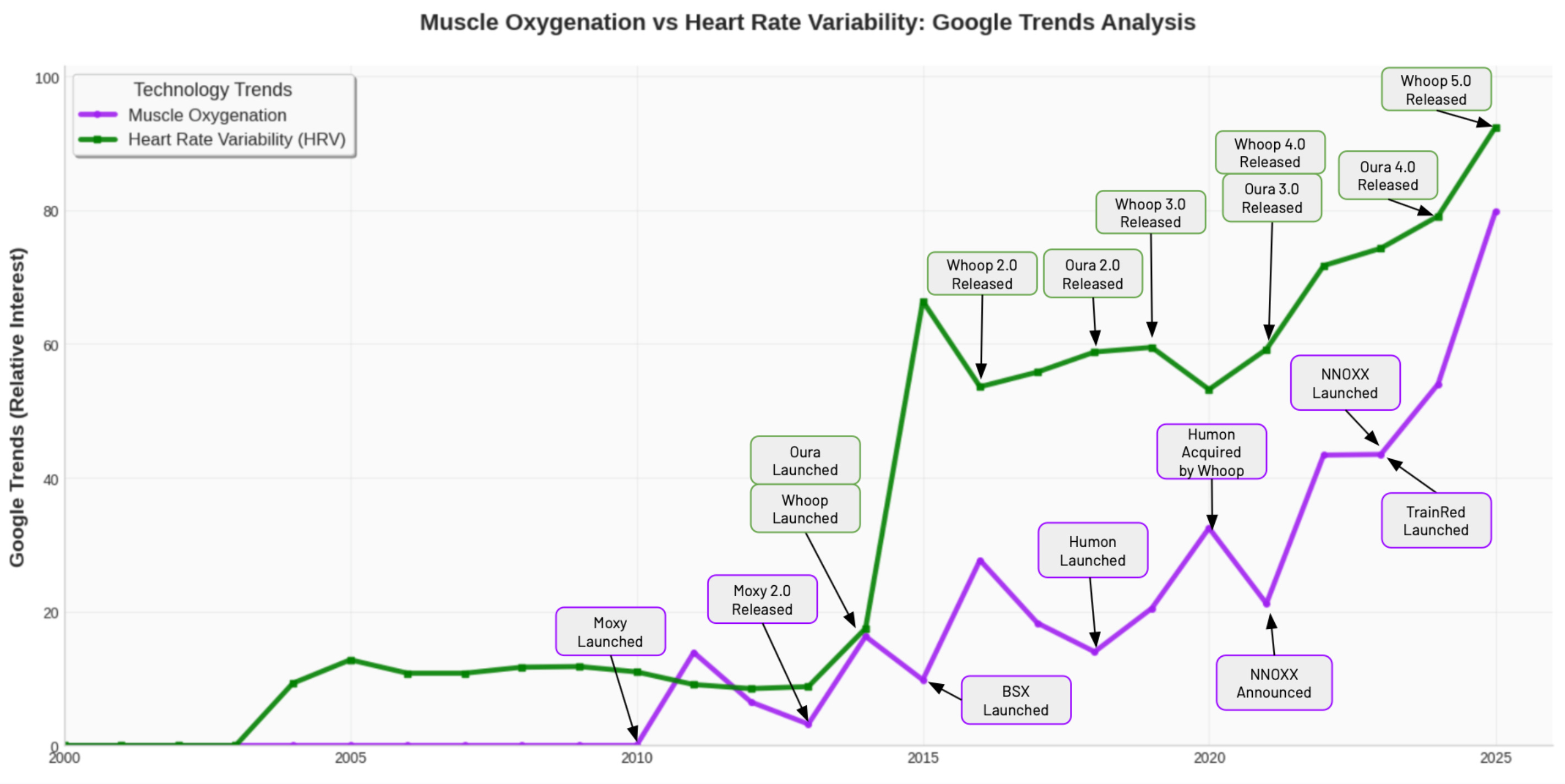
Against that backdrop, the muscle oxygenation trend line looks different—not a smooth climb, but a series of spikes and retreats, each one triggered by a new company entering the space. Moxy, the first company to release a consumer-focused muscle oximeter, generated an initial spike of interest that then subsided. The dynamics of emerging technology markets are counterintuitive in this way: a lone pioneer often fails to create a category, because without competitors, there’s no broader narrative for consumers or media to latch onto. Whoop and Oura grew together precisely because they were foils for one another—each company’s marketing reinforcing the other’s, collectively expanding the conversation about wearable health monitoring. Moxy had no such foil. Lacking real competitors, it also lacked the network effects, market validation, and sustained consumer awareness that competition, paradoxically, tends to generate.
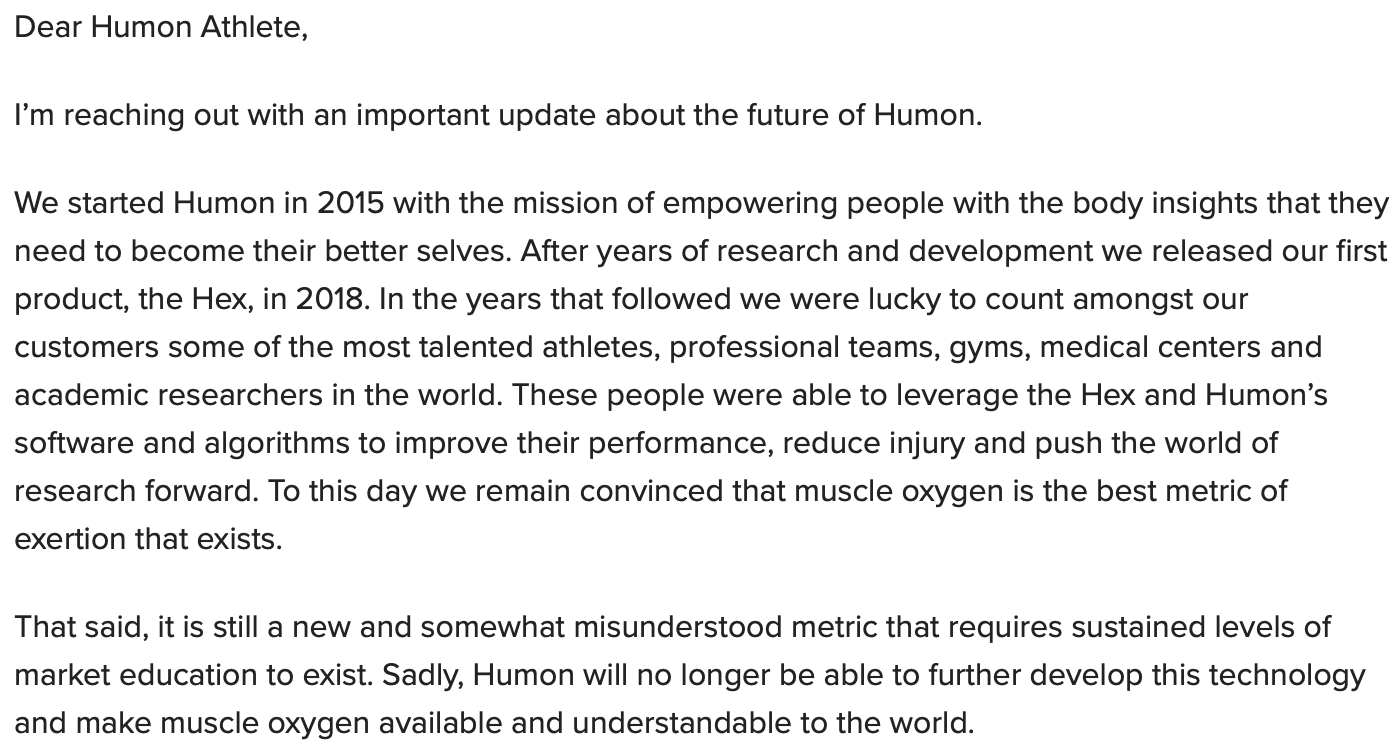
It wasn’t until Humon—a VC-backed spinout from MIT’s Venture Development Center—commercialized its flagship device in 2018 that muscle oxygenation seemed poised to achieve the kind of mainstream traction that eluded Moxy. Then, two years later, Humon shut down. In their closing letter, they cited the core challenge: muscle oxygen was a new and somewhat misunderstood metric that required sustained market education to exist. Building a user base around a concept most consumers have never encountered is expensive and slow. Without the runway to outlast that educational curve, even a good product can fail. Notably though, Whoop saw the potential in what Humon had built, acquiring their assets and team in a move that looked less like a corporate merger than a targeted acquihire—tellingly, Humon’s CTO Daniel Wiese became Whoop’s Director of R&D shortly after.
Following Humon’s closure, search interest in muscle oxygenation drifted back toward pre-Humon levels, reinforcing the impression that the category might simply not be ready. Then my co-founders and I announced the launch of NNOXX in 2021, after which Google Trends for muscle oxygenation reached an all-time high. Two years later when NNOXX and Train.Red—a European mNIRS company that launched around the same time—both brought their products to market in 2023, something new happened: for the first time, two well-funded, consumer-focused muscle oximeter companies were operating simultaneously, creating the competitive dynamic the category had always needed. From that point, interest in muscle oxygenation didn’t just recover—it climbed steadily and has continued to do so, now on a trajectory to overtake heart rate variability in search popularity within the next few years. Given how thoroughly HRV came to define the wearable technology conversation over the past decade, that’s an incredible thing to say about a metric that was essentially invisible to the general public not long ago.

Partly based on the above, my hypothesis was that Whoop and Oura would be forced toward distributed sensor architectures—multi-point sensing systems that capture physiological data from multiple locations on the body, rather than a single wrist or finger—both in order to stay competitive with one another and to fight off up and comers, which I previously wrote about in Distributed by Design. My logic was as follows: there’s only so many signals you can measure at any one anatomical site, and the first company to move beyond that constraint would gain a durable competitive advantage. But I also wrote, perhaps too confidently, that Whoop appeared to be doubling down on single-point sensing while Oura was already gesturing toward distributed architecture:
"Companies like Oura have already started moving in this direction by itegrating data from constant glucose monitors into their platform. This transition from single to multi-point sensing represents a schism opening up between companies like Oura, which are embracing distributed network sensing, and companies like Whoop who are doubling down on their single-point sensing technologies, making progressively bolder claims about its capabilities."
It was against this backdrop that I came across Whoop’s latest patent filing last week—listing, among its inventors, the founding team from Humon. On one hand, I’ve suspected Whoop would eventually deploy the assets they acquired from Humon in a new product rollout. On the other, I’d grown skeptical of their direction, assuming they’d continue abstracting away from their sensors’ underlying capabilities in favor of surface-level differentiation as I wrote about in Castes on Quicksand: A Consumer Health Tracking Story.
That said, the filing itself raises more questions than it answers. The sensor architecture it describes appears to rely on placing the existing Whoop device against different muscle groups to capture mNIRS data—rather than introducing a new, purpose-built sensor. Recent speculation about a mystery device spotted on Tadej Pogačar during the 2026 Strade Bianche seems to point in a related direction—though what exactly was being measured remains unclear.

Why does this mater? In February 2026, Whoop launched Whoop Advanced Labs in the UAE. Two months later, Team UAE Emirates—the professional cycling team Pogačar rides for and which he led to back-to-back Tour de France victories in 2024 and 2025—announced a partnership with Whoop, naming it their "Official Health and Performance Wearable." Pogačar is widely considered the GOAT of cycling, and equipment choices during races attract the kind of scrutiny in cycling circles that an Apple launch might generate in tech. A mystery sensor on his arm during Strade Bianche is not an accidental sighting. Whether it represents a Whoop 5.0 variant with enhanced optical capabilities (cleaner HRV, heart rate, and blood oxygenation readings during exercise), or something further along a development roadmap toward muscle oximetry, is the question.
If that reading is correct, the patent may be deliberately vague about a problem they haven't solved yet. That problem is source-detector geometry. Near-infrared light needs sufficient separation between the emitter and the photodetector—typically around 30mm—to ensure that photons penetrate deep enough into tissue to interact with muscle hemoglobin rather than simply scattering off the skin surface or being absorbed by subcutaneous fat. This isn’t a software problem or something a better algorithm can compensate for. It’s also the reason that Moxy, NNOXX, Train.Red, and BSX—companies that arrived at their designs independently, in different countries, over different time periods—all ended up with eerily similar form factors. The geometry is a constraint, not an aesthetic choice. A device optimized for wrist-based photoplethysmography isn’t going to become a muscle oximeter by virtue of being strapped to a bicep or quadricep.
If Whoop’s plan is to enable meaningful mNIRS readings from their existing hardware, they will almost certainly run into this wall. The alternative—developing a genuinely new sensor form factor, purpose-built for deep tissue optics—would represent a more significant strategic departure than anything they’ve announced publicly. What I suspect is that the patent represents an early-stage disclosure and that the actual product roadmap is still in flux. Whoop is reportedly eyeing an IPO, which creates real pressure to demonstrate a meaningful hardware differentiation story to investors. A credible move into muscle oxygenation, done properly and with the right sensor geometry, would be precisely that story. It would also be their first genuine step toward a distributed sensor architecture.
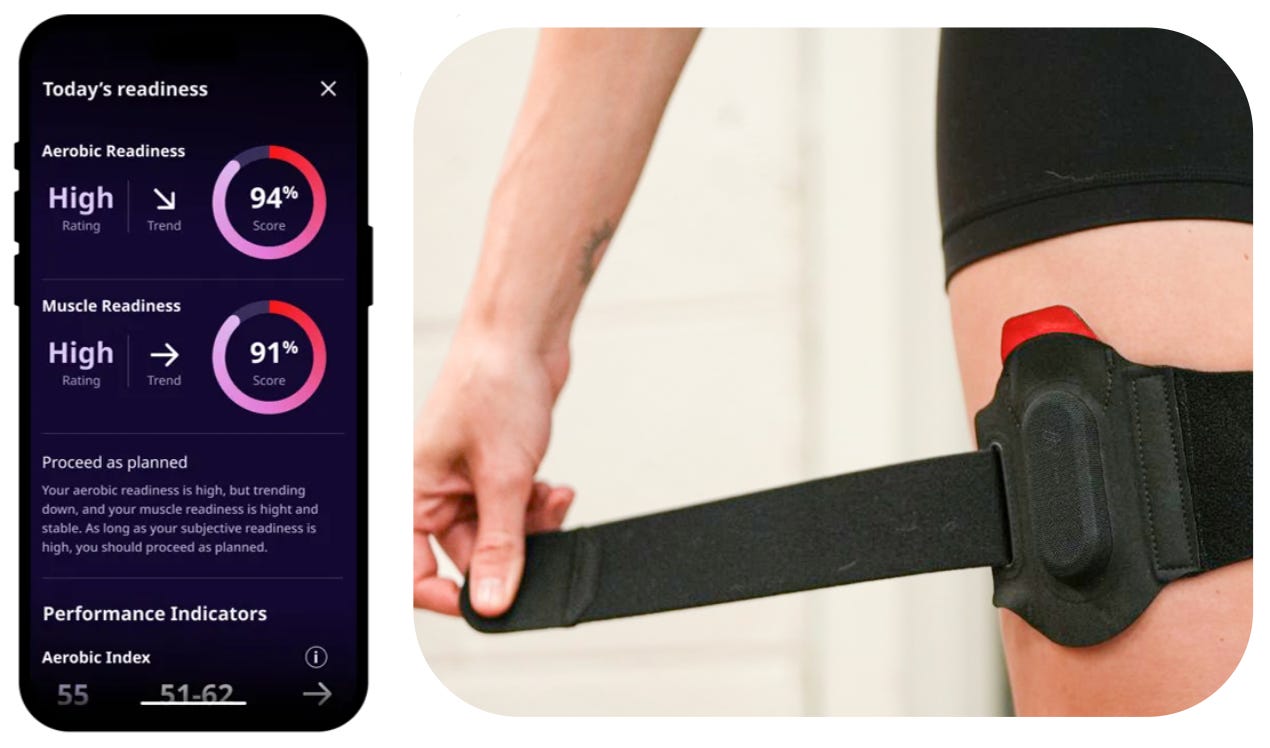
The question is what they’d actually do with a new purpose-built muscle oximeter. I have two predictions, and both stem from a gap that every serious athlete who has tried to train by wearable data has eventually run into. The first is readiness. Whoop already offers a readiness score, as does Oura and virtually every other consumer health wearable. But, these scores share a common limitation: they’re systemic. They measure how recovered your cardiovascular and autonomic nervous systems are and infer from that whether your body is prepared to perform. The problem is that systemic recovery and local muscle recovery don’t always move together—I first learned this when beta-testing an "AI coach" feature for OmegaWave in ~2013. Your HRV can look excellent the morning after a hard lower-body session while the muscles you trained are still compromised and a wrist-worn device has no way to see that discrepancy. What NNOXX built, and what Whoop could build with the Humon’s technology, is a readiness score that distinguishes between these two things—aerobic readiness on one hand, local muscle readiness on the other. The practical implication is significant: rather than asking "is my body ready?" athletes could ask "is this specific muscle group ready?"—and get an answer grounded in the tissue’s actual physiological state rather than a systemic proxy for it.
The second application is resistance training, and it’s where I think the opportunity is most underappreciated. The fundamental problem with quantifying strength training using wrist-worn wearables is that the two metrics most devices rely on—heart rate and accelerometry—are poor proxies for what actually determines training quality: metabolic demand and mechanical tension at the local muscle level. Heart rate during a set of heavy front squats tells you something about cardiovascular response, but it lags behind the actual effort, saturates quickly, and doesn’t distinguish between a set that was truly taxing on the working muscles and one where large increases in intra-abdominal pressure were driving increases in heart rate, without a proportional drop in muscle oxygenation. Additionally, accelerometry can count reps, but it says nothing about the physiological cost of producing them.
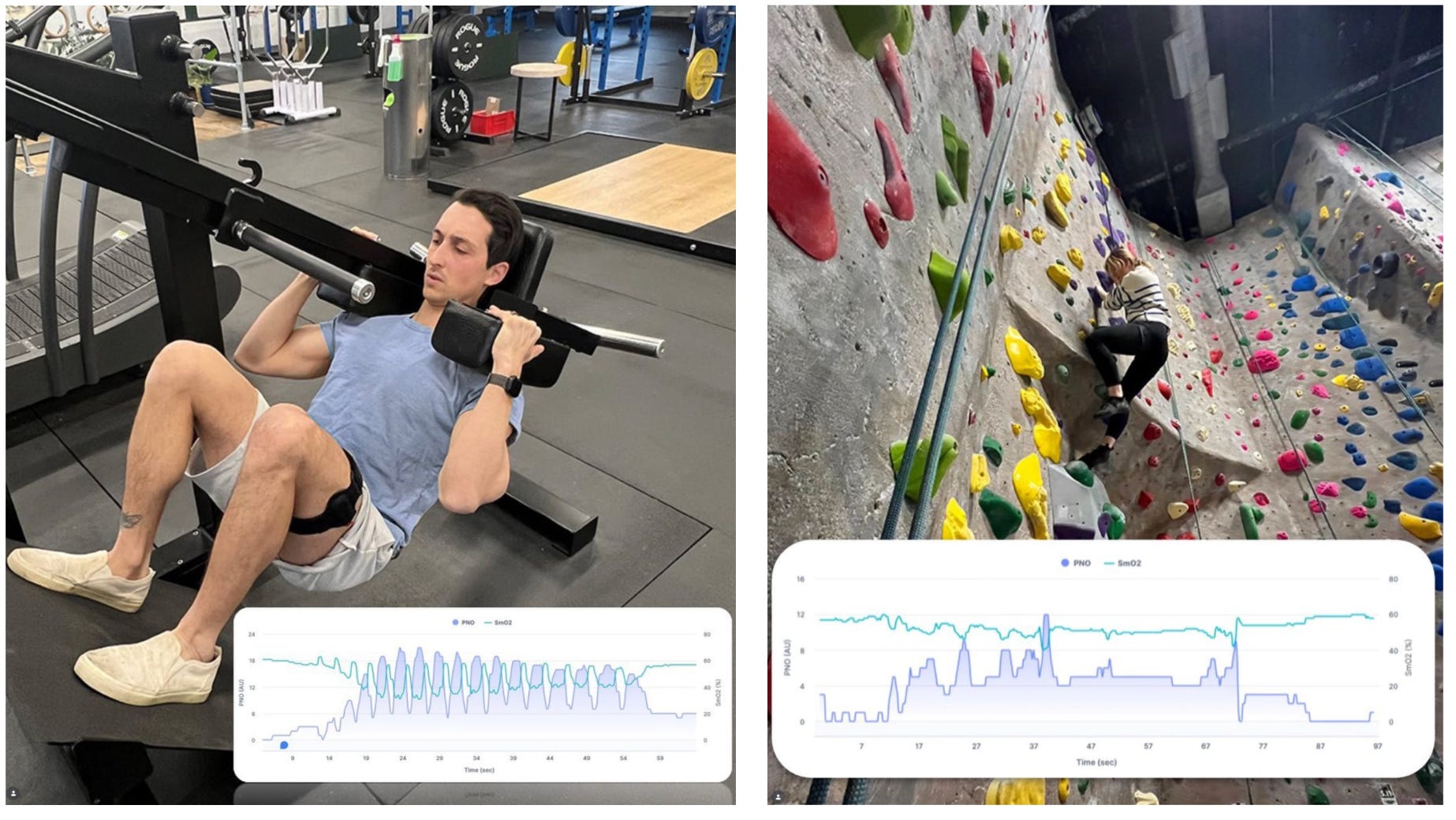
SmO2 changes this picture. During a set, you can watch muscle oxygenation drop in real time as demand outpaces supply and the steepness of that drop is a direct readout of exercise intensity at the tissue level, not a cardiovascular surrogate for it. Between sets, the reoxygenation curve tells you how quickly the muscle is recovering: a fast, complete rebound suggests the muscle is ready to work again; a slow or incomplete recovery suggests it isn’t, regardless of how long the clock says you’ve been resting. The combination of these two signals—depletion rate during effort, replenishment rate during recovery—gives you something that doesn’t currently exist in any mainstream wearable: an objective, real-time measure of strain from resistance training.
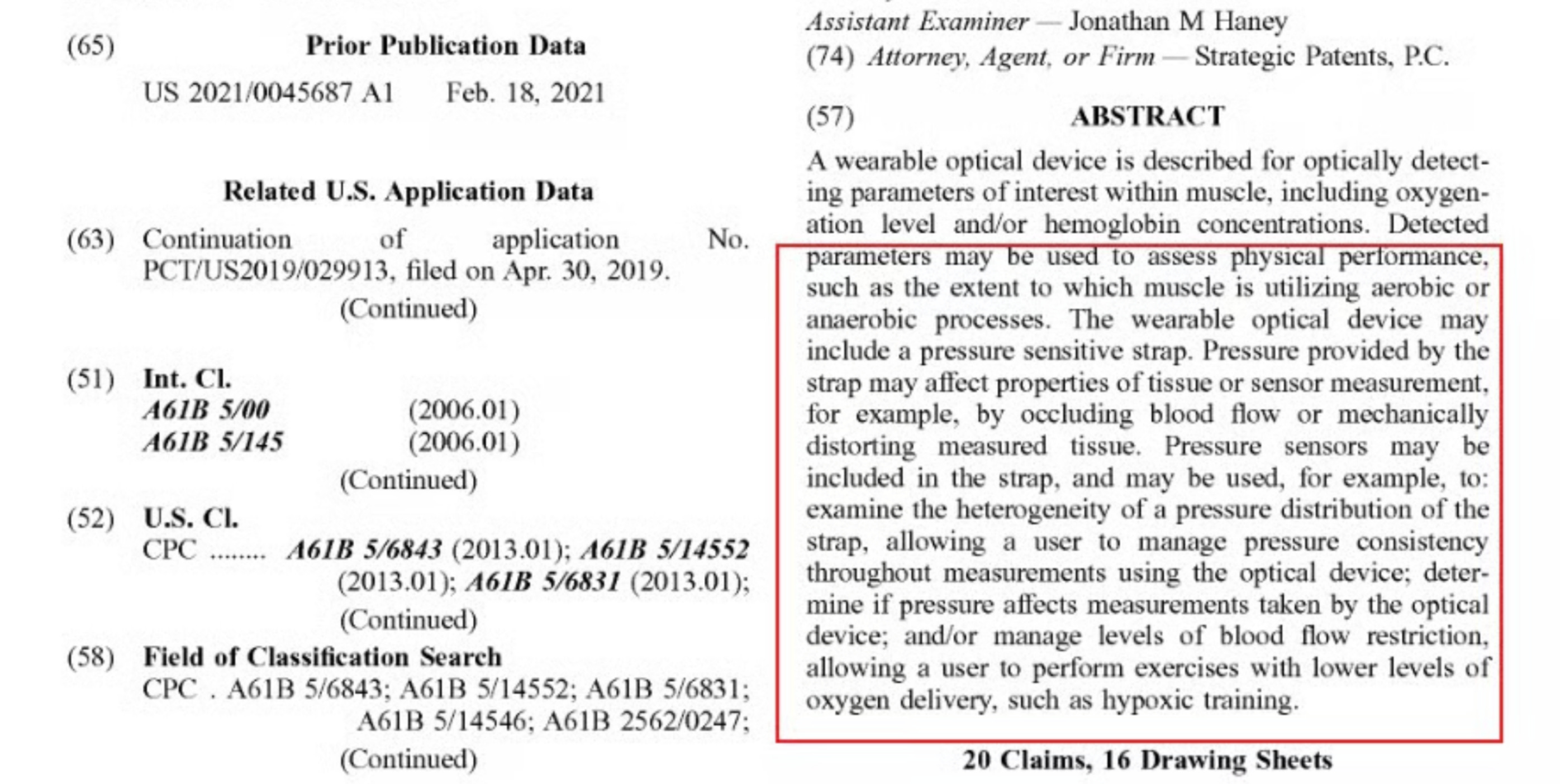
Note: On a further reading, a lot of this patent hinges around the pressure sensitive strap. To me, there could be two uses for this. One is ensuring that pressure from the strap securing the sensor doesn’t impact muscle oxygenation readings. The other is developing an open or closed-loop feedback system for muscle oxygenation-guided BFR training. My sense is that the latter is the target, given that the Humon sensor’s readings didn’t appear to be impacted to a large degree by the pressure exerted on the leg from it’s strap (~30 mmHG).
Consider the total addressable market for this type of technology. Endurance athletes have had access to objective intensity metrics for decades, both external and internal—power meters on bikes, pace data from GPS, HR readings, blood lactate, VO2. Strength athletes have had RPE and rep counts. The gap between those two worlds is not just a data gap; it’s a coaching and training design gap. Closing it with a wearable that can actually see into the muscle would be, for strength training, what the power meter and heart rate were for cycling: a shift from subjective feel to ground truth.
Whether Whoop gets there, or whether they will be the first major player to enter this space, is uncertain. The constraints of adding an SmO2 reading to a Whoop band are real, and if that is their plan there are reasons to be skeptical. But the pieces are in place in a way they haven’t been before—the acquired technology from Humon, the recent patent filing, the IPO pressure, and a market that has spent the last two years discovering that muscle oxygenation is a metric worth caring about. What happens next will be one of the more consequential product stories in wearables in some time.

About the Author
I’m a computational biologist and bioengineer whose work spans precision oncology, biodefense, and human performance. As a founder at NNOXX, I helped build the first platform to measure muscle oxygenation and nitric oxide bioactivity non-invasively and in real time, bringing a first-to-market technology from concept to commercialization. Since then, my work has focused on developing computational models to understand cancer evolution and mechanisms of treatment resistance. You can read about what I’m currently learning, working on, and thinking about on Sequence & Destroy, or reach me at evanpeikon@gmail.com.
Why did NNOXX went of the market?